JP: The Gem of Odia Literature
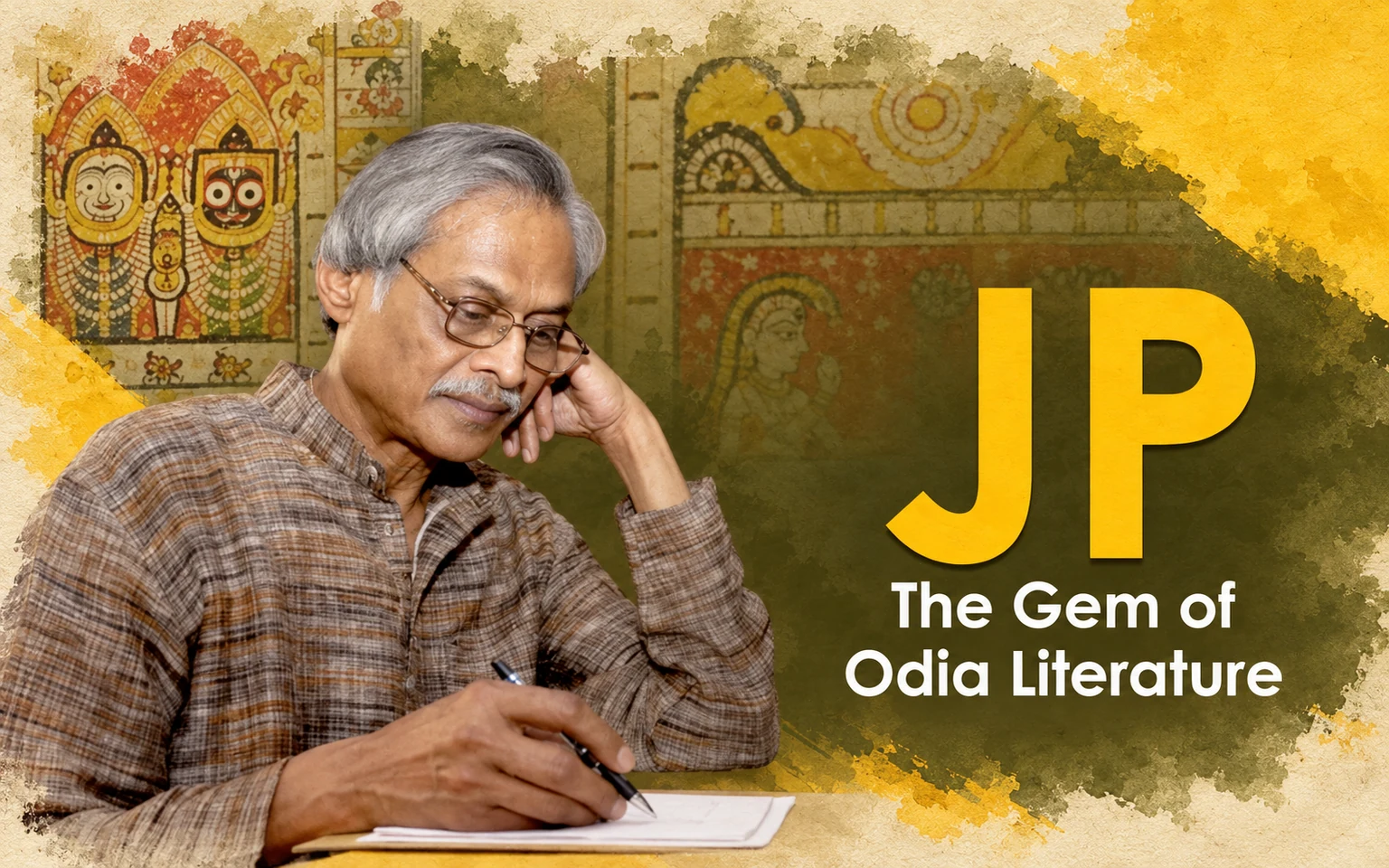
Jagannath Prasad Das, better known as JP or JP Das, is a very familiar name not only in Odia literature but also in literary and cultural circles across India.
Born in Cuttack in 1936, he graduated from Ravenshaw College and completed his postgraduate studies at Allahabad University, then a popular destination for IAS aspirants. For a brief period, he was an Assistant Professor at Allahabad University and then his dreams came true.
He joined the Indian Administrative Service in 1958 and was allotted the Odisha cadre. His tenure as Collector, Kalahandi district was quite eventful in the days when Kalahandi was synonymous with hunger and destitution. He left the IAS in 1984 to pursue writing and research.
As a scholar, he received the Homi Bhabha Fellowship in 1979, an Emeritus Fellowship from the Government of India’s Department of Culture in 1994, and a K. K. Birla Foundation Fellowship in 1996. His pioneering work as a scholar and researcher is widely acknowledged nationally and internationally. His research contributed to the study and documentation of Odisha’s pata paintings.
As a writer, he delved into multiple areas including poetry, short stories, novels, plays, and children’s literature. Besides, he is a very distinguished editor and translator. He has successfully established his credentials in all the fields of literature with equal distinction. He had a unique style and experimented with new elements in his writing. I remember the sensation his Bhabanath series of short stories created in the early eighties.
In 1991 his magnum opus Desha Kala Patra, a historical novel, came out and it was widely appreciated. I had presented about half a dozen copies to different friends on occasions like marriage receptions. Deservingly he received the Odisha Sahitya Academy award, Central Sahitya Akademi award, Sarala Award, and Saraswati Samman for his contributions to literature.
When JP was associated with the Children’s Film Society of India as one of its key functionaries he had come on an official visit to Bhubaneswar around 1985 and was staying in the Kalinga Ashoka Hotel, the only star hotel in Bhubaneswar in those days. Dipak Samantrai, my esteemed friend and colleague in All India Radio, Cuttack had fixed an appointment with him for an interview and invited me to join for the said interview. That morning we reached the hotel and knocked at his door. The famous film actress and director Parbati Ghosh, who was present then, opened it for us. JP came in and greeted us with a smile.
His warmth of affection for two young writers was unforgettable. Madam Parbati Ghosh served us coffee that day and it became a memorable day for us. The interview was as usual very informal and interesting. He answered all our questions with ease. We were enamored by his impressive personality and depth of knowledge. Dipak took some snaps with his camera and the interview got published a few days later.
Although staying in Delhi, he used to drop in Bhubaneswar frequently and was seen at literary gatherings in the company of fellow writers. He also used to conduct annual poetry workshops for budding poets in the Regional College of Education, Bhubaneswar under the auspices of the Poetry Society of India. It continued for some years. A few years before this essay was published one evening I spotted him at a literary get-together and asked him when he had arrived.
To my surprise, he said that he had shifted to Bhubaneswar because Delhi’s environment no longer suited him and doctors had advised him to leave for his health. Now he’s spending his days in his old house in Suryanagar, Bhubaneswar. With declining health, he is avoiding meetings and social gatherings by politely refusing such invitations. But he is very much active on social media and his posts carry lots of information about literature and culture. He has a collection of old letters and documents of archival value.
Leave a thought
No account needed. Your name and comment appear publicly after approval.