Tarun Kanti Mishra: The Master Storyteller
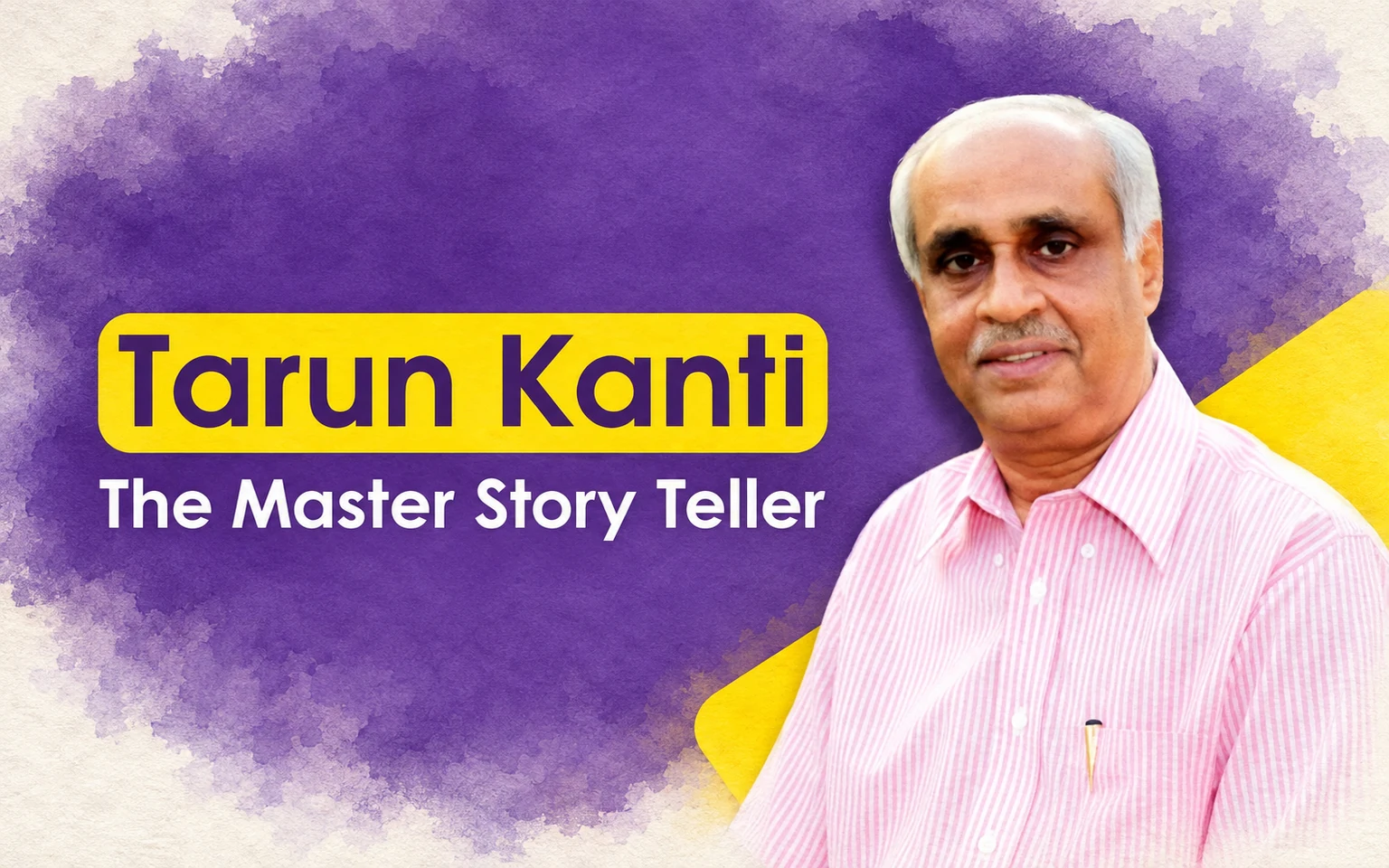
Tarun Kanti Mishra is a front-ranking fiction writer in contemporary Odia literature. Born in the year 1950 in a village in Anandpur sub-division in Keonjhar district, he had his schooling in Puri and Cuttack. He graduated with Economics Honours and completed his postgraduate studies in Applied Economics at Utkal University. A brilliant student, Mr Mishra wanted to become a professor but ultimately joined the IAS in 1975.
He was drawn to literature at an early age and his first short story was published in the leading literary journal Asantakali at fourteen when he was still in school. His first short story collection came out during his graduation days. He has short-story collections and novels to his credit. Some of his works have been translated into various Indian languages. He received the Odisha Sahitya Academy award in 1997 and the Sarala Award in 2001. His short-story collection Bhaswati won the Central Sahitya Akademi award in 2019.
Mr Mishra is a prolific writer and a master storyteller, who knows how to captivate his readers with his lucid style and the uniqueness of his characters. His narrative style is in the tradition of his illustrious predecessors like Akhil Mohan Patnaik and Manoj Das or his contemporaries like Rama Chandra Behera and Padmaja Paul. In his stories, he tries to play with words, bringing out the poet in him in a profound way. The protagonists of his stories are very often victims of life’s tragedies, and their experiences move me deeply.
On the professional front, he held key positions in the Odisha Government and was famous for his no-nonsense approach. He was the Deputy Chief Administrator of the Dandakaranya Development Authority during his young days and was passionately involved in the resettlement of the refugees from Bangladesh. He also wrote a novel set in Dandakaranya.
He was the Secretary of some important departments like the Housing and Urban Development Department, Home Department, etc. He rose to become Development Commissioner cum Additional Chief Secretary and finally he became the Chief Secretary in 2009. After his superannuation in 2010, he joined as the Chief Information Commissioner of the State and relinquished office in 2015.
I was an avid reader of his short stories which are quite refreshing in themes and style. His narratives are very realistic and take the readers on a ride. I would feel that the characters were familiar to me and instantly develop an affinity with them. During my 1984–86 tenure at All India Radio, Cuttack, my friend and classmate Chitta Ranjan Sahu who was then a lecturer in a private college and was a keen reader came to me one day with a manuscript. It was a radio play written by Ghana Bihari Moharana, himself a banker and short story writer and it was based on a short story by Tarun Kanti Mishra about an extramarital relationship.
I was quite impressed by the storyline and the play. I gave it to veteran producer Dasarathi Das who liked it very much. He assured me that he would produce the radio play himself and I was sure that it would be a big hit. Soon thereafter I had to leave All India Radio and I am not sure whether it could materialize or not. But this incident brought me closer to the writings of Mr Mishra and I never missed a chance to read his work.
Although he was a very tough administrator and seemed stern on the surface, he was very soft at heart. I felt that this compassion also found its way into his writing. Once when he was the Chief Secretary he came across a newspaper report that one of his teachers in BJB College did not get his final pension even after a decade of his superannuation. He immediately sent a note to the Secretary of the Higher Education Department expressing his displeasure and asking for prompt action in the matter. I also helped pursue the pension matter. His effort to help his teacher was praiseworthy.
I had attended many meetings under his chairmanship as Chief Secretary and I found him very forceful in his opinions. Once he got convinced of a particular issue he used to support it vehemently. When he was the Development Commissioner the cadre restructuring proposal of OAS and OFS cadres was under consideration and he openly advocated for maintaining the historic parity between the two cadres and it was finally accepted by the Government.
I had the opportunity to have a nice time with him when he was the Home Secretary and both of us had to attend a marriage ceremony of the son of a common friend in Bhubaneswar. The procession started from Xavier’s Square and reached Hotel Suryansh near Kalinga Hospital taking about two hours. I had to give him company and he was very cordial and open in his dealings with me. We discussed a lot of things from his writings to contemporary issues in administration.
He spoke from his heart without any inhibition. Although he looks shy outwardly, once he starts talking he opens up gradually. I could then realize the true spirit of his personality. At a literary get-together in Hotel Mayfair organized by Prabha Foundation, he was being interviewed. Dr. Hiranmayee Mishra, a very young and powerful writer, interviewed him and at the end of the session, he took questions from the audience. He narrated his ordeals in life and how he had to face frequent transfers in his career at the cost of his children’s education.
He was very candid in admitting that many of his superiors in service never recognized him as a writer and that a writer has to face difficulties in balancing life between professional responsibilities and passion for writing. He is now a free bird and fully committed to his passion in life: literature.
Leave a thought
No account needed. Your name and comment appear publicly after approval.