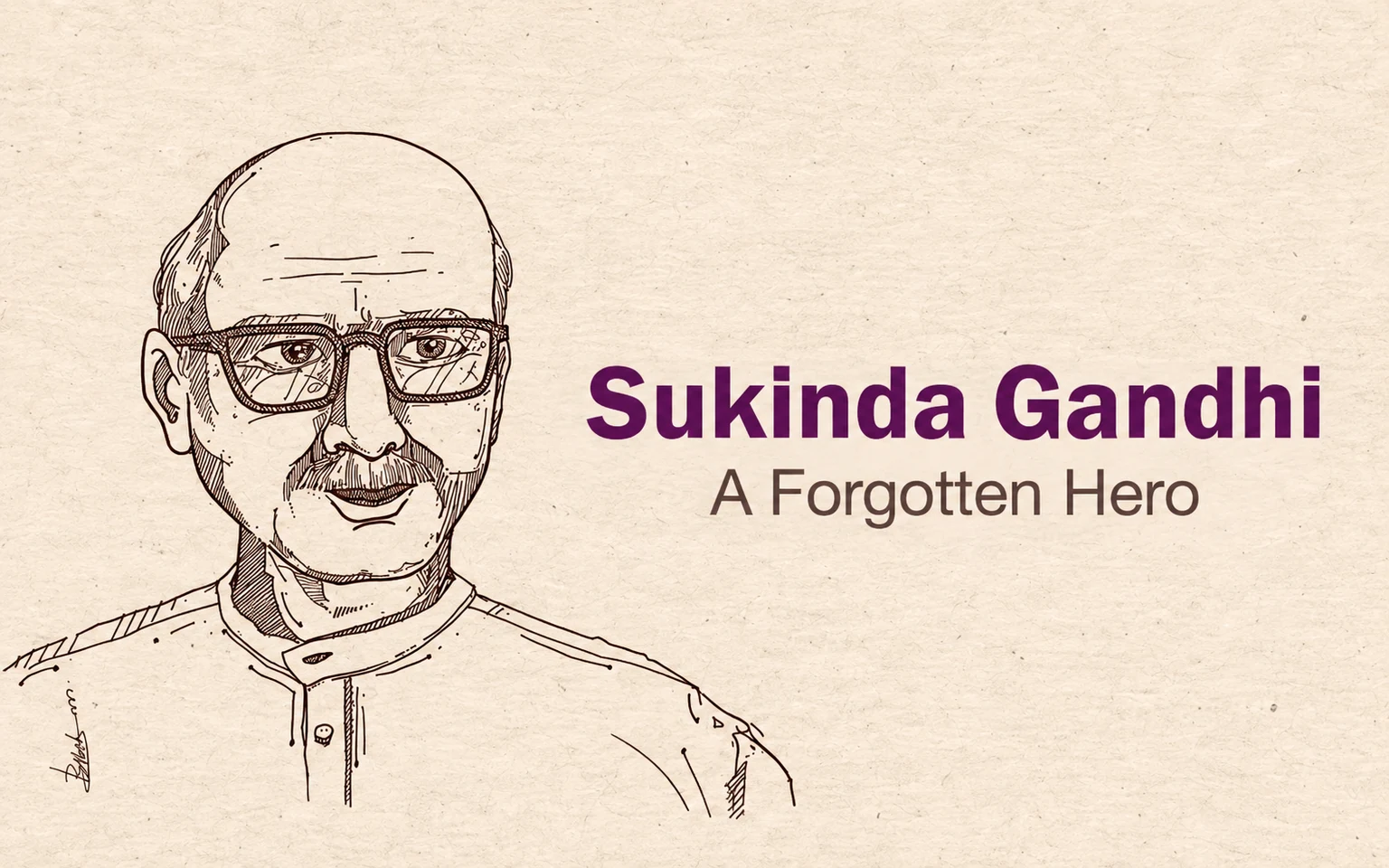
Sukinda Gandhi: A Forgotten Hero
During British rule, Sukinda was a zamindari estate in the former Cuttack district, headed by a raja. The area was famous for its large forest cover and mineral resources.
My maternal grandfather, the late Duryodhan Ray, was once a revenue official under the King of Sukinda. When Mahatma Gandhi called for the Civil Disobedience Movement in 1930 the call echoed in every nook and corner of the country. He was then drawn towards Gandhian philosophy and freedom struggle. In 1934 Gopabandhu Choudhury and Rama Devi established an Ashram in Bari in Jajpur District following Mahatma Gandhi’s call to go back to the villages and undertake constructive work and raise awareness among the people.
This idea touched his heart and he decided to implement it in Sukinda. Soon after, in September 1938 the Cuttack District Peasant Conference was held in Jenapur attended by leading freedom fighters of the State. It gave momentum to the public agitation in adjoining areas including Sukinda. Sometime before the conference, leaders like Nabakrushna Chowdhury, Malati Devi, Surendra Nath Dwivedi, Gouranga Charan Das addressed the peasants in Sukinda, Dharmasala, and Gada Madhupur areas and organized them against the local rulers who were acting as agents of the British government.
Against this background, he finally made up his mind and resigned from his job to join the freedom movement. He came in contact with leading freedom fighters like Gopabandhu Choudhury, Rama Devi, Naba Krushna Choudhury, Malati Devi, Surendra Dwivedi, and others, and established an Ashram in a remote village called Ullal which along with the surrounding villages was inhabited by scheduled caste people. He was against untouchability and gave these people free access to his house. The local people got organized under his leadership and agitated against the local ruler as well as the British government.
Many leading freedom fighters of the time used to visit this place, availing of his hospitality and encouraging the agitation. He became the leading light of the freedom movement in Sukinda and was branded as an enemy of the British government.
In 1942 Gandhi gave the clarion call for the Quit India Movement which became a turning point in the history of India. The freedom fighters across the country intensified the movement. The Government became more vindictive and arrested the leaders. On 14th September the police raided his house and arrested him. The news spread like wildfire and the people from the locality gathered there. He then addressed the gathering saying that it was a proud moment for him to get arrested for a noble cause and requested them to carry on the agitation.
The people accompanied him up to Danagadi, now the block headquarters, in a procession with drum beats. He was initially awarded a six-month jail term at Choudwar jail and subsequently it was enhanced to two years. He was shifted to Berhampur jail as a political prisoner and there he was in the company of many veteran freedom fighters of the State. While he was in jail, his family members had to face the wrath of the King and his henchmen but the local people stood behind them although a few changed sides, enticed by the ruling establishment.
Misfortune followed him into jail, one loss after another. Within a few months, he lost his father and thereafter his eight-year-old son. It was followed by another piece of shocking news. He then lost his nineteen-year-old daughter, to whom he was especially attached. The fellow prisoners, many of whom had come in close contact with his family, tried to console him during the time of distress.
The Jailor then advised him to file an appeal in which he promised not to take part in further agitation so that the Government may release him. He refused to do so and instead told him that he would not compromise his allegiance to the motherland for the sake of his family. He remained firm and completed his jail term. I felt his sacrifices deserved greater recognition.
After independence, he got another shock when the Congress party denied him a ticket for the legislative assembly. He contested a by-election from Sukinda as a Ganatantra candidate but was unsuccessful. His candidacy was a mark of protest, although his chances of winning were slight. Subsequently, he became the first Chairman of Danagadi Panchayat Samiti when the Panchayati Raj system was introduced in the State.
His tenure was brief: he lost a no-confidence motion following ideological differences with the other members. He finally breathed his last in 1965 as a disillusioned man whose dreams died young.
Leave a thought
No account needed. Your name and comment appear publicly after approval.