Sarat Chandran: The Savior
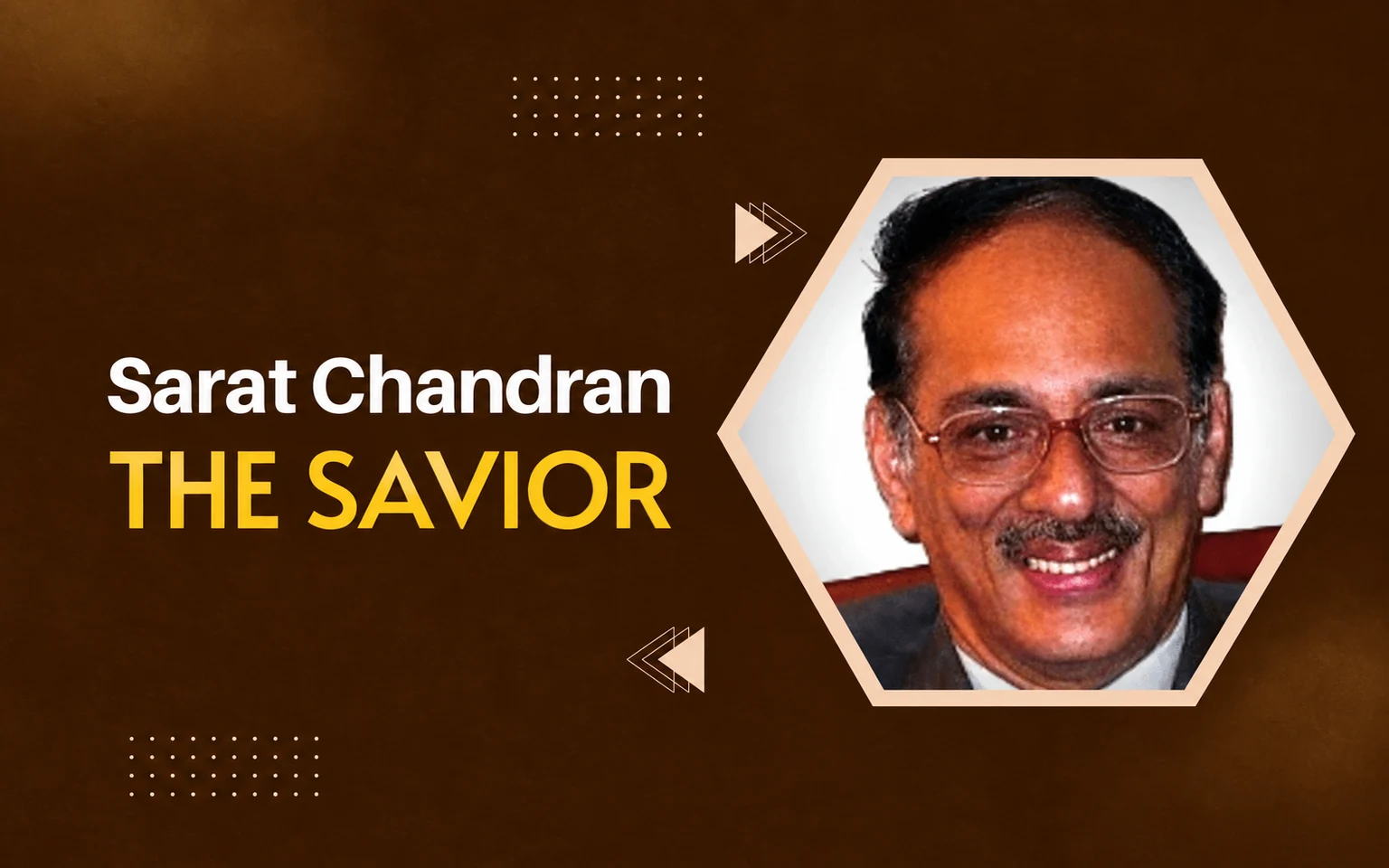
Towards the end of the last century, Odisha was almost in the red. Most of the states had the same fate. Revenue expenditure exceeded revenue receipts substantially and the loan burden was not sustainable.
From 2000–01 to 2002–03, Odisha relied on RBI Ways and Means Advances and overdrafts for more than 300 days a year to meet routine expenditure. Development spending was under severe pressure.
Meanwhile, a new government assumed power at a crucial time. It was the biggest challenge for any government. No solution was in sight.
At this critical time, Dr Sarat Chandran came back to Odisha after completing central deputation. This was a golden opportunity for the Chief Minister. He wanted to utilize his services to put the State’s finances back on track. By December 2003, he was serving as Principal Secretary, Finance.
Dr Sarat Chandran was a brilliant student of economics with a Ph.D. from abroad. He had worked in the Government of India in different capacities and served as Private Secretary to Dr Manmohan Singh when he was the Deputy Chairman, Planning Commission. A person of such an illustrious background was an obvious choice to handle the State finance. A tall and handsome guy, he was a very honest and upright person.
As an administrator he was very tough and uncompromising. Enjoying the Chief Minister’s confidence, he proceeded to deal with matters firmly.
To begin with, he called the Secretaries of all the departments individually and sought a detailed understanding of their schemes, programmes and critical issues. Invariably the concerned officers of the Finance Department were present in those meetings. In one such meeting he was reviewing the education sector.
Both the secretaries of Higher Education and School & Mass Education were present with senior officials. I was in that meeting. The crucial issue that emerged in the meeting was a large liability for salary arrears of aided educational institutions as per court orders.
The concerned secretaries urged the Finance Secretary to solve the issue on priority. He carefully listened to their pleadings and had the final say in the matter. It was perhaps the month of November or December.
He said that, as Finance Secretary in those circumstances, he could not assure timely salary payments from February onwards. He was not even sure whether those present would receive pensions after retirement. Everyone left the meeting with a gloomy face.
Austerity measures were enforced rigorously. He didn’t entertain any new proposal for purchase of costly vehicles by the departments. Rather he issued a circular for one officer and one vehicle. He himself was using a twelve-year-old Maruti 800 without replacing it during his tenure.
An interesting incident happened on the issue of non-payment of teachers’ salary arrears as per court order and a contempt notice was issued against him for non-compliance with the court’s order. He was asked for personal appearance in the case. He was prepared for the occasion. On the given day he travelled to Cuttack in his Maruti 800 vehicle and appeared before the Hon’ble High Court.
The Hon’ble Court wanted to know why its order had not been implemented. He politely explained the precarious situation of the State finance and how it was impossible on his part to carry out the orders.
Not only Secretaries but even Ministers hesitated to approach him with requests.
Finance Minister Prafulla Chandra Ghadai used to refer to him as a British-type officer. In fact he was a strict disciplinarian. Once a meeting was fixed in his chamber with representatives of a foreign agency. We were present in his chamber at the right time.
They were five minutes late and got a dressing down from him for the delay. He stood like a rock against the adverse conditions of the State and gradually things started looking bright thanks to his timely interventions and reform initiatives. He made a major contribution to addressing the State’s financial crisis.
In 2006, he served as Development Commissioner and Additional Chief Secretary. He later worked as an adviser with the Independent Evaluation Office of the International Monetary Fund.
After retirement he left for Kerala, his home State. In his personal life, too, he practised economy and was against extravagance.
Before leaving he disposed of most of the old belongings through auction sale at his residence and staff members were able to buy them at very low prices. Then he sent his essential belongings through a transport agency and finally boarded the train with his wife rather than fly.
While bidding farewell to him at the railway station I was pondering the life and philosophy of the great man who was truly an exception for most of us.
Leave a thought
No account needed. Your name and comment appear publicly after approval.