Ramakant Rath: The Poet Laureate
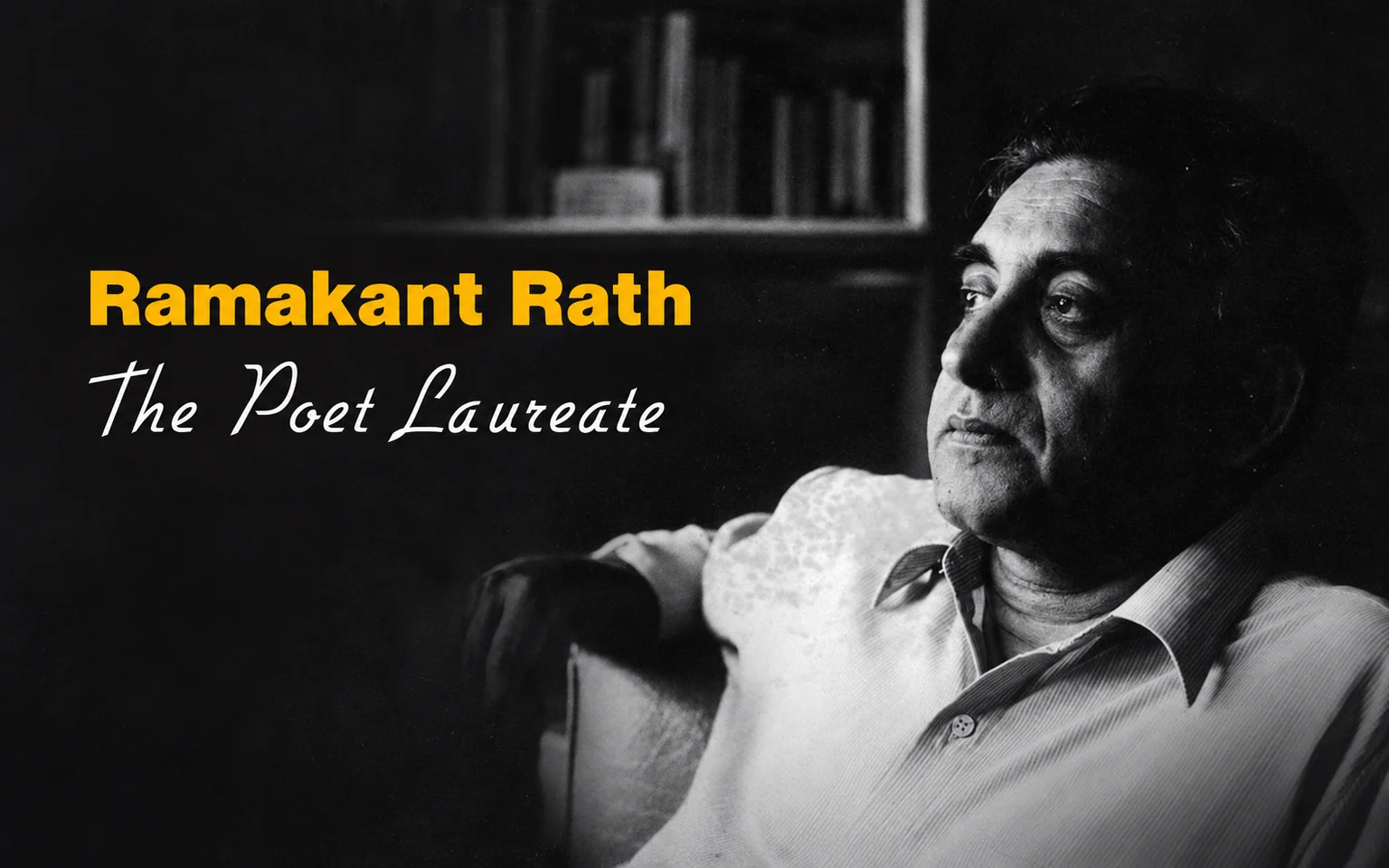
Ramakant Rath (b. 1934) is a name to be reckoned with in the field of contemporary Indian poetry. He is a legend in his lifetime. A poet of eminence, former Chief Secretary, former President of Central Sahitya Akademi and the winner of several national awards including Padma Bhushan, his poetic work continues to inspire me. As an administrator, he had the reputation of being a very tough bureaucrat. He served as Chief Secretary of Odisha. During the Chief Ministership of the late Nandini Satpathy, he was her Private Secretary, and with her confidence in him he had considerable clout in the State administration.
But as a poet he is far from the corridors of power and lobbying for himself. He began to bloom as a poet during his student days at the prestigious Ravenshaw College, Cuttack (now a university) and attracted attention of the poetry lovers and critics. Being an extraordinarily brilliant student he had sufficient exposure to western literature and works of poets like T. S. Eliot and Ezra Pound. At the same time he was greatly influenced by the spiritual and metaphysical poetic traditions of the ancient and medieval Odia literature. Within a very short time he carved a niche for himself. His poems revolve around love and death, the melancholy and futility of present day life. His poetry collection Saptam Rutu ( the Seventh Season) speaks of the inevitability of death. The death consciousness of man in the post-war period was a major theme in western poetry and I see something of this influence in his work, although he found another narrative in the life of Kansa of Indian mythology who was haunted by death day and night in a most pitiable condition. In his preface to this poetry collection he gives a beautiful account of the life of Kansa and his sleepless nights waiting for the inevitable. However, he is famous for his long epic poem Sriradha which earned him Saraswati Samman and got translated into so many languages. It’s considered as a modern classic in Indian poetry. Here Sriradha of the Vaishnavite traditions takes the image of a contemporary woman crushed between her passionate longing and love for the lover and the mundane existence of life.
I had a fair acquaintance with his poems since my school days when he was being published regularly in the mainstream literature journals as a major poet of the time. It was an evening in Delhi perhaps in October 1983 when I met him face to face for the first time at the residence of late Bighnaraj Patel, an IAS officer of Odisha who was then Secretary, UPSC. He was then about to return to the state on completion of his central deputation. During those days Sriradha was being published in piecemeal in various magazines and he asked for my views on it. Without realising how passionate he was about his poems I casually replied that it was dragging at some points. This made him visibly upset and I had to regret later for such remarks. Subsequently, Sriradha became his magnum opus and when he bagged Saraswati Samman for it he was felicitated by many organisations in the state. In one such event organised by the PG Department of Odia in Utkal University I had the honour to share the dais with him and there I publicly apologised for my remarks years back.
Once the then Chief Minister Biju Patnaik in a public meeting commented that he could never understand the writings of his Chief Secretary although they fetched him national awards. As a poet he is definitely difficult for the common readers to understand but he has excelled in his poetic craft, to the delight of serious readers and critics. His reputation as a master poet has overshadowed his ability in writing prose. His prefaces to his poetry collections are in a class of their own. His short stories are equally very powerful and keep the readers engaged. He is not a powerful public speaker but he always comes prepared and speaks to the point in a very crisp manner. He never forgets to take small notes for his speech and keeps to time as a true bureaucrat.
As President of Sahitya Akademi he had initiated many innovative projects for the betterment of Indian literature. Particularly, he encouraged younger writers and initiatives to publish their maiden works in different languages.
Although I was never very close to him personally, I had high regard for him as a person and also as a poet. He is a simple and soft hearted person who had encountered many personal tragedies in life. In 1995 I got selected for a fellowship in literature by Department of Culture, Government of India and he was the first person to break the news when we had visited his house to greet him on the occasion of Holi. In 1998 he lost one of his younger brothers and he had to travel to Puri in a van for the last rites. That day I saw him in a state of utmost shock and sorrow for losing his own brother. I could imagine the depth of anguish and loss writ large on his pale face.
Although he had been Chief Secretary, I often saw him in the market, carrying fish and vegetables home for his family.
Leave a thought
No account needed. Your name and comment appear publicly after approval.