Life in an idyllic village
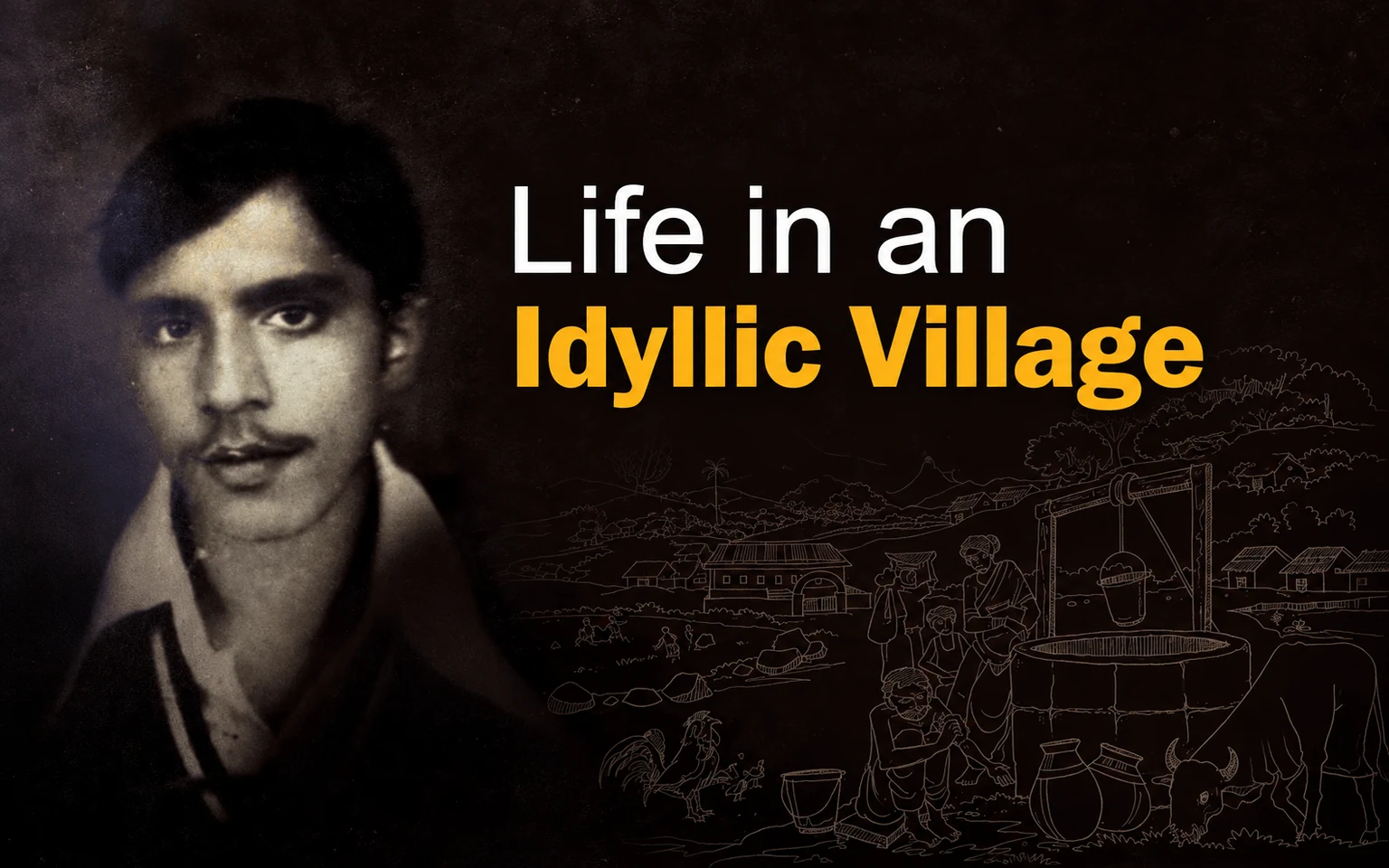
It was the evening of 6th May, 1960. I came into this world as the first child of my parents. The village midwife performed the rituals of my birth in her traditional style. There was jubilation in the family. Besides my parents and grandparents, neighbours and relatives showered their blessings on me.
My mother was happy to have her first child and enjoy the bliss of motherhood. My father was proud too. Our village, Rachhipur, was under Keonjhar State before independence. It was a part of Jujhapada Dandapat, comprising three villages. In our village lower primary school, the history and geography of Keonjhar State were taught before independence.
After independence, it became a part of the Cuttack district and subsequently came under Jajpur district after district reorganisation in the nineties. There were long stretches of paddy fields around the village with patches of bushes which served as habitat for jackals and various other species. Occasionally, during summer, bears visited the village from the nearby jungles to enjoy seasonal fruits, and created havoc.
In fact, fruits like mangoes, jamun and jackfruit were plentiful. Similarly, troops of monkeys came from somewhere and damaged the trees and thatched houses. There were two or three large tanks on the edges of the village and they were maintained for fishing and bathing. We practised swimming there and during summer afternoons we used to spend hours there to beat the heat.
In the swimming competition, we had to swim from one end to the other. There were no tube-wells in those days and deep wells were used to supply drinking water. Water grew scarce during summer, and we queued at nearby wells early in the morning.
We had a big playground, and football and volleyball were being played by different groups. Once, during a football tournament, the goalkeeper from our village was kicked in the chest and died on the spot. For a few years, the playground was out of bounds for the boys due to pressure from their parents.
There was a primary school in the village and subsequently a Middle English school was opened and I was the first to enroll. Girls made up around ten percent of the pupils and the dropout rate was higher in their case. Many of these girls were married while still at school. Even some of my classmates shared that fate; I scarcely understood marriage then.
Besides the festivals celebrated with much enthusiasm, the village youth staged a play every year. With no girl willing to join, boys played the women’s roles. I participated in some plays as a child actor and received physical punishment from my father who usually directed these plays. Pala and Daskathia were organized on different occasions.
The entire village celebrated Raja, Prathamastami, Holi, Durga Puja, Deepavali, Kumar Purnima with fervor. The girls observed Raja and Kumar Purnima enthusiastically. For the children, these were occasions for merrymaking. They played kabaddi, football and volleyball. The older men enjoyed playing cards or Pasha in groups and the women and children played Lodoo among themselves.
The Sani temple in the village was very famous in the locality and people from nearby villages thronged it for the annual celebration. It has become better known since then. A week-long fair was held in Vyasa Sarobar close to our village and it was always a delight to visit the fair more than once. Women bought household goods at the fair. Presently, it has lost its charm with rapid urbanization, although the place has been renovated and declared as a tourist site by the State Government.
I had my schooling in the village school and the teachers lived on the school premises and ran a mess. We were given free tuition in the evening and we used to offer rice and vegetables to the teachers every week, which sufficed to run the mess. There was a competition among the students to clean the utensils and interestingly to eat their leftovers in the belief that this might bring success in our studies. Although I used to take part in football and volleyball games, I was a poor performer and I found an escape through my interest in literature during those days. I started writing from class four and my grandfather was my inspiration for writing.
There were plenty of vegetables, fish and dairy products available in the village from local vendors and in the weekly haat in a nearby village. Every household had cows and milk was plentiful. During the rainy season, fish were caught in large quantities and people dried some to eat later. The vendors supplying items at the doorstep used to take paddy or rice instead of cash. The barter system was still in use.
The harvesting season was a time for enjoyment and the children got the chance to enjoy sweets from the local sweet makers visiting the village. Fruits such as apples and grapes were rare treats in the village. Guests sometimes brought them, and we might also get a taste when someone was ill.
As the first child in the house, I had some privileges which my younger siblings could not enjoy. I had three brothers and two sisters. Another sister died when she was hardly six months old. On festive occasions, I would get two or three new outfits.
I was fond of Britannia cream biscuits and after eating the cream I used to throw the biscuits to the dogs. Once in the late evening, I insisted on laddoos and my uncle had to go to the nearby town to fetch them for me. Once he brought them I stopped crying. One of our neighbours, an old man, used to harass me on my way to school. I took a sword from the puja room and wounded him, making him bleed profusely. My mother slapped me. The old man later pardoned me because I was a child.
My father brought a Bush radio set in the sixties and it was the only source of entertainment in our locality. There was no electricity in the village and it came in the late seventies. The first night our house was lit we could not sleep at night. Repeatedly we woke up to see the bright lights on and enjoyed the fan turning above us.
Before that, we slept on the veranda on summer nights to escape the unbearable heat indoors. Each of us had a handmade fan to beat the heat. A black-and-white TV set came to our house in the eighties and the entire neighbourhood assembled in our house to watch the programmes.
In the mid eighties, we had a telephone connection to our house and it was the first in our village. People would come and wait for a call from their near and dear ones living elsewhere. There were two cinema halls in Jajpur Road and people occasionally visited them. During Raja, Prathamastami and Puja time new Odia films were released and women and children went to watch the films in large numbers.
Two incidents of my childhood days remain vivid in my mind. On the night of 14 July 1969, a train collision at Jajpur Road killed 85 people and injured many others. The next morning we visited the spot to find dead bodies and mutilated body parts scattered around. The horrible sight kept me awake that night. They were mostly pilgrims from north India coming to see Nabakalebar Rath Yatra of Lord Jagannath at Puri. Next came the devastating cyclone of late October 1971. It crossed the coast near Paradip early on 30 October, with winds of around 167 km/h. We watched the old trees in our village fall one after another. The thatched houses were badly damaged and rainwater poured into the houses, damaging everything. There was no space to sit or sleep. Everything got drenched in rainwater. Fish from the ponds were found swimming on the village roads.
For the next two or three days, people depended on dry food items supplied by government officials. The cyclone washed away a few villages near the sea and heavy casualties occurred in coastal districts. Reported losses across the State included about ten thousand people and fifty thousand cattle killed, and eight lakh houses damaged. In time, the routines of village life resumed.
Leave a thought
No account needed. Your name and comment appear publicly after approval.