Jayanta Mahapatra: The Doyen of Poetry
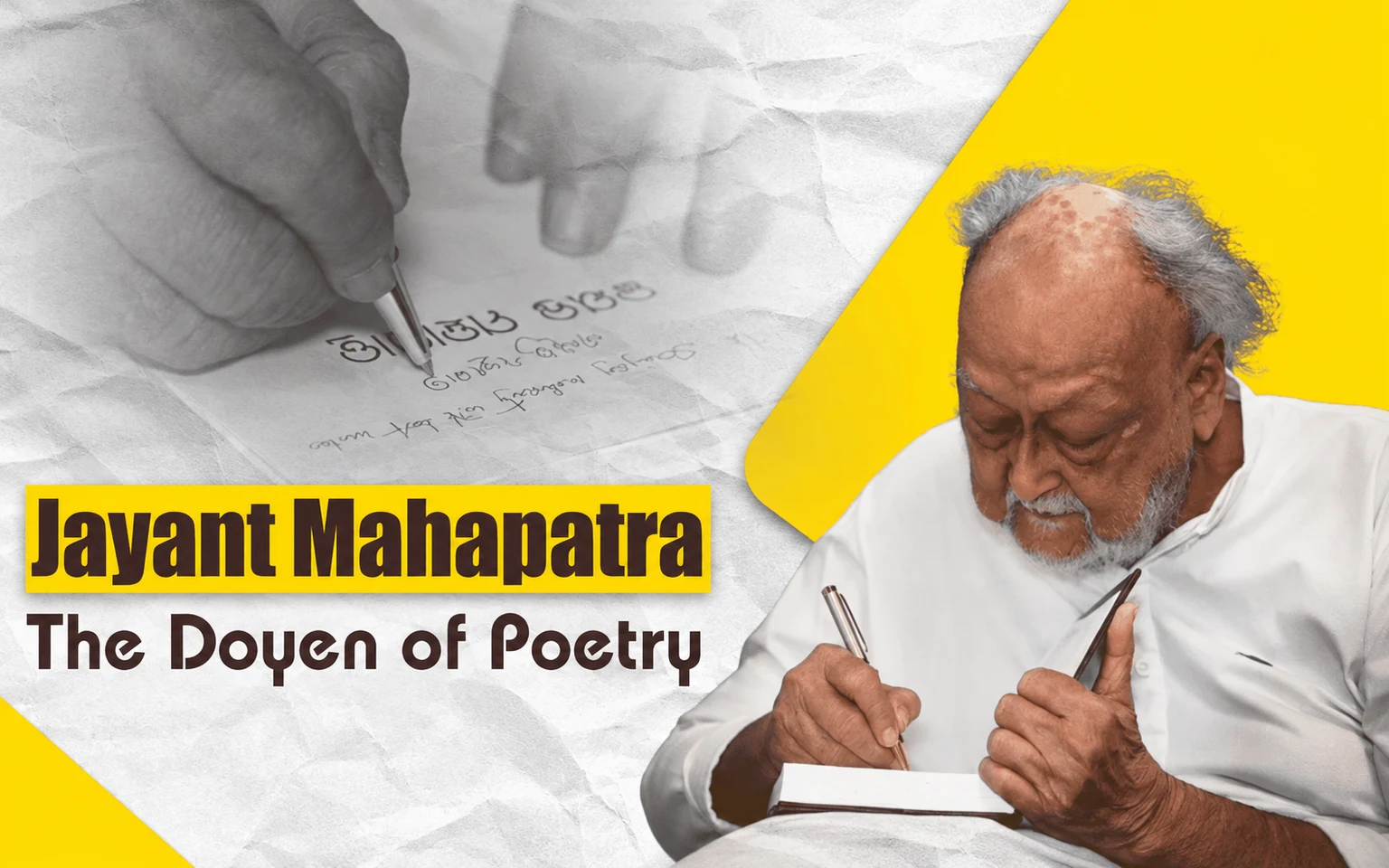
I first heard of Jayanta Mahapatra when he bagged the Central Sahitya Akademi award for his poetry collection ‘Relationship’ in 1981—the first such award for English poetry. Everyone was taken by surprise. A physics professor turned poet he had by then gotten international recognition but he was less widely known in his home state. No wonder his poetry revolves around Odisha, its history, topography, myth and myriad cultural milieu.
Cuttack remains his favourite place on earth although he has travelled far and wide across the globe. Kathjodi and Mahanadi inspire him a lot in his poetic journey over the years. The black pagoda Konark, the golden beach of Puri, Lord Jagannath, the Kalinga War, Dhauli and river Daya reverberate in his poems. The devastation of the great famine of 1866 haunted his poetry with a sense of loss and disillusionment. One of his forefathers changed his faith in the face of starvation and death during those fateful days.
He was a latecomer to literature, starting to write poetry hesitantly in his forties. Writing from Cuttack, he reached readers abroad through journals such as Poetry and The Sewanee Review. That exposure helped bring him an invitation to the University of Iowa’s International Writing Program in 1976. His unique style of narration and unusual themes earned him a distinct place in the poetry world. His poems speak of human relationships entangled in love and loss, memories of the past and fleeting reflections of time like waves on the seashore. His unbridled love for his soil and genuine feelings for the common men make him a true poet with compassion.
I came in contact with this genius during my 1984–86 tenure at All India Radio, Cuttack. One of my colleagues and close friends Shri Dipak Samantrai, himself a poet and photographer, introduced me to him. He is one of his close confidants to date.
Both of us used to visit his famous single-storied house in Tinikonia Bagicha in the heart of the town surrounded by trees and were entertained by his ever-endearing smile and small jokes over tea and snacks served by his affable wife whom we addressed as Mausi out of love and affection. Alas, she’s no more. Every time we met, he would ask whether I had found a sweetheart; otherwise, he insisted, it was impossible to be a poet. Whenever I said no he would dismiss me as a poet. Once Dipak broke the news that I had passed his test, and then he burst into a big laugh and congratulated me. Much water has flowed in the river Mahanadi since then. After I left Cuttack, meetings with him became occasional.
After the deaths of his wife and son, the house that had once been full of life seemed much quieter to me. I remember those visits with sadness. Nevertheless, his house is always considered a place of pilgrimage for young poets and poetry lovers. Most of his contemporaries in the Indian English literary landscape are no more and he is now the grand old man of Indian English Poetry. Although he was older than my father, he has always behaved like a friend.
I admire his sense of humour and childlike simplicity. There are thousands of fans and followers like me around the world who love him and respect him as a poet and as a person as well. Age never seemed to catch up with him and he is still young in the heart in his nineties. He very often says that love is the essence of literature and that love never ends with one person in life. He is a true lover of life and literature.
He not only writes poetry but more importantly lives the life of a poet. He has dozens of poetry collections both in English and Odia and many of his poems have been published in international journals. All the awards bestowed upon him including Padmashri can never measure the poet in him and he is much above everything. He is a soulful poet who has never betrayed his heart.
His literary journey is not confined to writing poetry in English. He is a translator and editor of repute. He was associated with many literary journals as editor of their poetry pages and finally, he edited and published ‘Chandrabhaga’, a journal dedicated to poetry which quickly attracted international recognition.
Some years back he delved into writing poems in his mother tongue Odia and left an imprint with his impressive style. Recently, I spent a few hours in his company in a literary seminar and I presented him a shawl as a token of honour on that occasion. When I told him that he may use it in the next winter he replied that he was not sure whether he would survive until then. It brought tears to my eyes.
I pray to God that he lives to a hundred and remains an inspiration for all of us for many more years!
Leave a thought
No account needed. Your name and comment appear publicly after approval.