Tourism Potential of the Diamond Triangle in Odisha
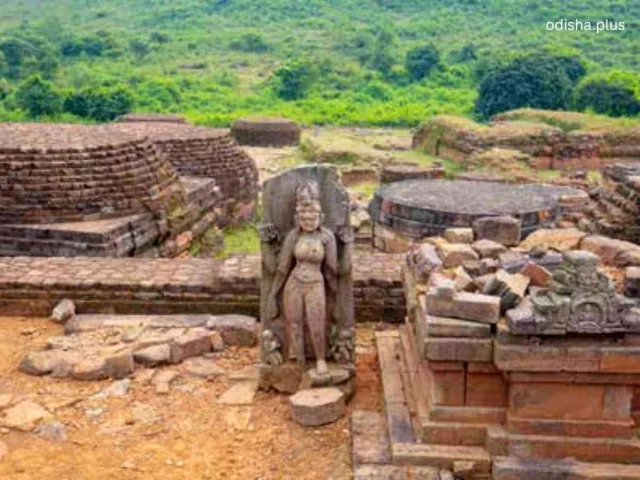
The Golden Triangle of Puri, Konark and Bhubaneswar, together with nearby Chilika Lake, occupies a prominent place in Odisha’s tourism. We should give equal thought to places whose historical importance has yet to receive comparable attention. The Buddhist Diamond Triangle of Ratnagiri, Udayagiri and Lalitgiri is one such destination. Ratnagiri and Udayagiri lie in Jajpur district, while Lalitgiri is in Cuttack district. Together, they offer an exceptional opportunity to bring pilgrimage, scholarship and cultural tourism into closer contact with local livelihoods.
A heritage worth understanding
The monasteries, stupas, prayer halls and sculptures reveal a rich history of Buddhist worship, learning and artistic achievement. Images of the Buddha and deities such as Tara, Manjushri and Avalokiteswara give visitors much to explore. These are not merely picturesque ruins. Their architecture, inscriptions and objects help us understand how religious institutions developed and how different Buddhist traditions found expression in Odisha.
The three sites have distinct histories and were excavated in different phases. Dr Debala Mitra’s important work at Ratnagiri during 1958–61 brought the scale and splendour of its Buddhist establishment into clearer view. Her reports remain significant for the study of the site. Extensive ASI excavations at Lalitgiri took place much later, during the 1980s and early 1990s; work at Udayagiri also proceeded in separate campaigns. These discoveries give each site a distinctive place in the region’s archaeological history.
Lalitgiri is among Odisha’s earliest Buddhist settlements. At Udayagiri, the ASI’s account of the 1985–89 excavations dates the exposed monastery and stupa to the eighth–twelfth centuries CE. Ratnagiri is especially important to the study of Mahayana and Vajrayana Buddhism. Together, the sites illuminate the long development of Buddhism in eastern India. Their connections with other centres of learning offer a rewarding field for research, while their distinctive artistic traditions deserve wider appreciation.
The identification of Pushpagiri, mentioned by the seventh-century Chinese pilgrim Xuanzang, also needs care. Interpretations have associated it with the Diamond Triangle, while inscriptions at nearby Langudi have supported a different identification. It should not simply be equated with Ratnagiri as a settled fact. Good interpretation can explain such debates without diminishing the fascination of the region.
Pilgrimage and cultural exchange
The Diamond Triangle could become a stronger part of Buddhist travel itineraries linking Odisha with Bodhgaya and Nalanda. This requires sustained relationships with monasteries, pilgrimage organisers and cultural institutions, not publicity alone. Visitors should be offered enough time to understand the sites, use their museums and experience the surrounding landscape rather than hurry through a succession of monuments.
Sri Lanka offers a particularly meaningful connection. In the traditional account, Princess Hemamala and Prince Danta carried the sacred tooth relic from Kalinga to Sri Lanka. The relic now venerated at Kandy is distinct from the bodily relics recovered at Lalitgiri. This tradition provides a valuable basis for cultural dialogue, though ancient Kalinga should not be treated as exactly coterminous with modern Odisha. Exchanges involving scholars, monks and tourism organisations could help make this shared heritage better known.
A sound promotion plan should identify interested pilgrimage groups, test suitable itineraries and assess the response before setting expansion targets. Tourism agencies could work with organisers to understand visitors’ interests, preferred languages and practical needs. Monitoring bookings, length of stay and local spending would help turn this cultural connection into a sustainable exchange.
The first Guru Padmasambhava ceremony in January 2025, organised by the Light of Buddhadharma Foundation International, brought monks and devotees to the three sites. It demonstrated the possibilities for living religious engagement alongside archaeological appreciation. We should follow up with such organisers, encourage scholarly exchanges and plan gatherings in ways that respect both worshippers and the fragile remains.
Museums, learning and access
Lalitgiri’s archaeological museum, inaugurated in December 2018, and the site museum at Ratnagiri are important parts of the visitor experience. The Ministry of Culture describes the Lalitgiri relic caskets as containing charred bones. These bodily relics hold deep devotional significance. The caskets and other antiquities deserve secure preservation and careful interpretation, with archaeological findings and religious attributions clearly explained.
Museums can do more than display objects. Clear labels, accessible explanations and trained guides can connect a sculpture or inscription to the monastery where it was found. Students and researchers would benefit from well-prepared educational visits and opportunities to study the collections. The idea of a Buddhist university or a strong centre for Buddhist studies deserves consideration, provided its academic purpose, resources and relationship with existing institutions are carefully worked out.
Bhubaneswar and Cuttack can serve as gateways to the circuit, but distances and journey times differ by site and route. Practical information should help visitors plan transport, museum visits and overnight stays. Reliable approach roads, signposting and connections between the three sites would make the circuit easier to explore. Site-specific journey information should allow time for both travel and unhurried visits.
Development with conservation
The immediate priority should be dependable visitor services: drinking water, clean toilets, places to rest, suitable food and a choice of accommodation. We need a proper assessment of existing facilities before deciding what more to build. Well-run homestays and small local enterprises could complement hotels, giving residents a direct stake in tourism. Guides, drivers, cooks and craftspeople should have opportunities to participate and earn fairly.
The quiet landscape is itself part of the attraction. Walking, reflection and carefully managed nature-based activities can complement heritage visits, but tourism should not overwhelm the sites with construction, traffic or waste. New facilities must respect archaeological protection requirements. The ASI, tourism authorities and local communities need to work together on conservation, drainage, maintenance and visitor management.
Odisha should develop the Diamond Triangle as a priority, with accurate historical interpretation and sustained national and international promotion. Success should be judged not only by footfall but also by the condition of the monuments, the quality of the visit and the benefits reaching nearby communities. With patient, coordinated work, this heritage could become a stronger centre of Buddhist and cultural tourism, create local employment and deepen Odisha’s cultural connections with the wider world.